July 2026
Kaeru Desktop App
A lightweight AI workspace anyone can use: chat with an agent to build and edit, preview your app live, and keep your work safe with plain-language source control. A desktop app built on Tauri + Rust, about 8 MB.

Most dev tools assume you're already a developer. Kaeru assumes you're not — and still hands you the real terminal, real git, and a proper editor underneath.
Most dev tools assume you're already a developer. Kaeru assumes you're not — and still hands you the real terminal, real git, and a proper editor underneath.
Kaeru (帰る, "to return home") is a lightweight AI workspace for people who build things without being developers — non-technical makers, vibecoders, and Japanese users (English and 日本語 are both built in). You chat with an agent to create and edit, browse your files, preview your app live, and keep your work safe with plain-language source control. A real terminal sits underneath for whenever you want it.
It's a desktop app built on Tauri 2 + Rust, so the whole thing is about 8 MB on disk — native, not a browser pretending to be an app.
The v2 redesign
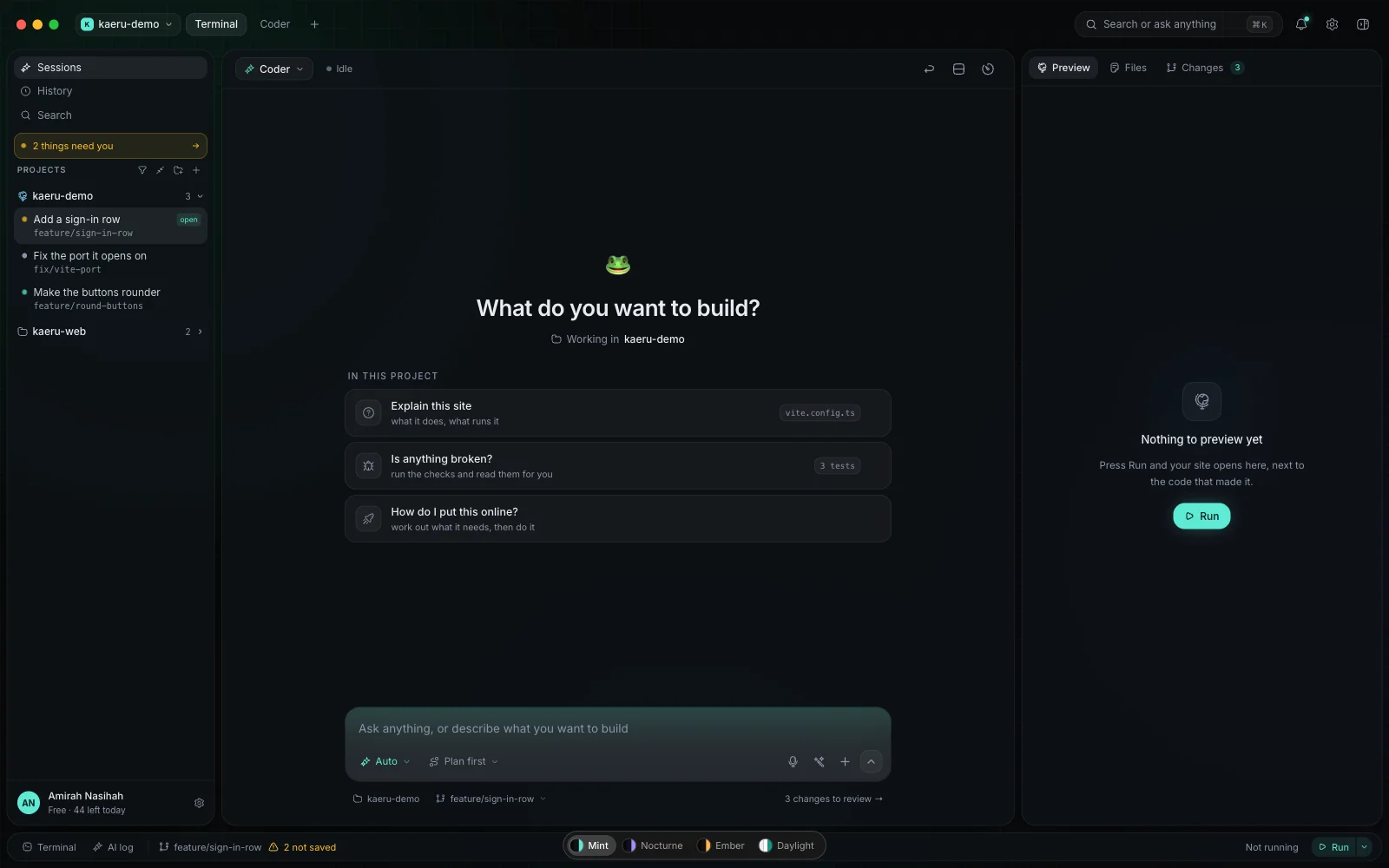
The current design, iterated in the UI harness (harness.html?story=full-app-v2) before touching the app. What changed and why:
- A session is a task, and a task is a branch. The sidebar lists work as things you asked for — "Add a sign-in row", "Fix the port it opens on" — each pinned to its own branch (
feature/sign-in-row,fix/vite-port). The git model is still there, it just speaks in outcomes. - "2 things need you" — an attention queue instead of notification noise. The app tells you when it is blocked, not when it is busy.
- The blank state asks the product question — "What do you want to build?" with three project-aware starters: explain this site, is anything broken, how do I put this online. Each is wired to the actual repo (it names
vite.config.ts, counts the real tests). - Preview lives beside the conversation — press Run and your site opens next to the code that made it, rather than in a browser tab you have to find.
- Four named themes (Mint, Nocturne, Ember, Daylight) switchable from the status bar, replacing the earlier single dark look.
What's inside
🤖 AI you just sign into
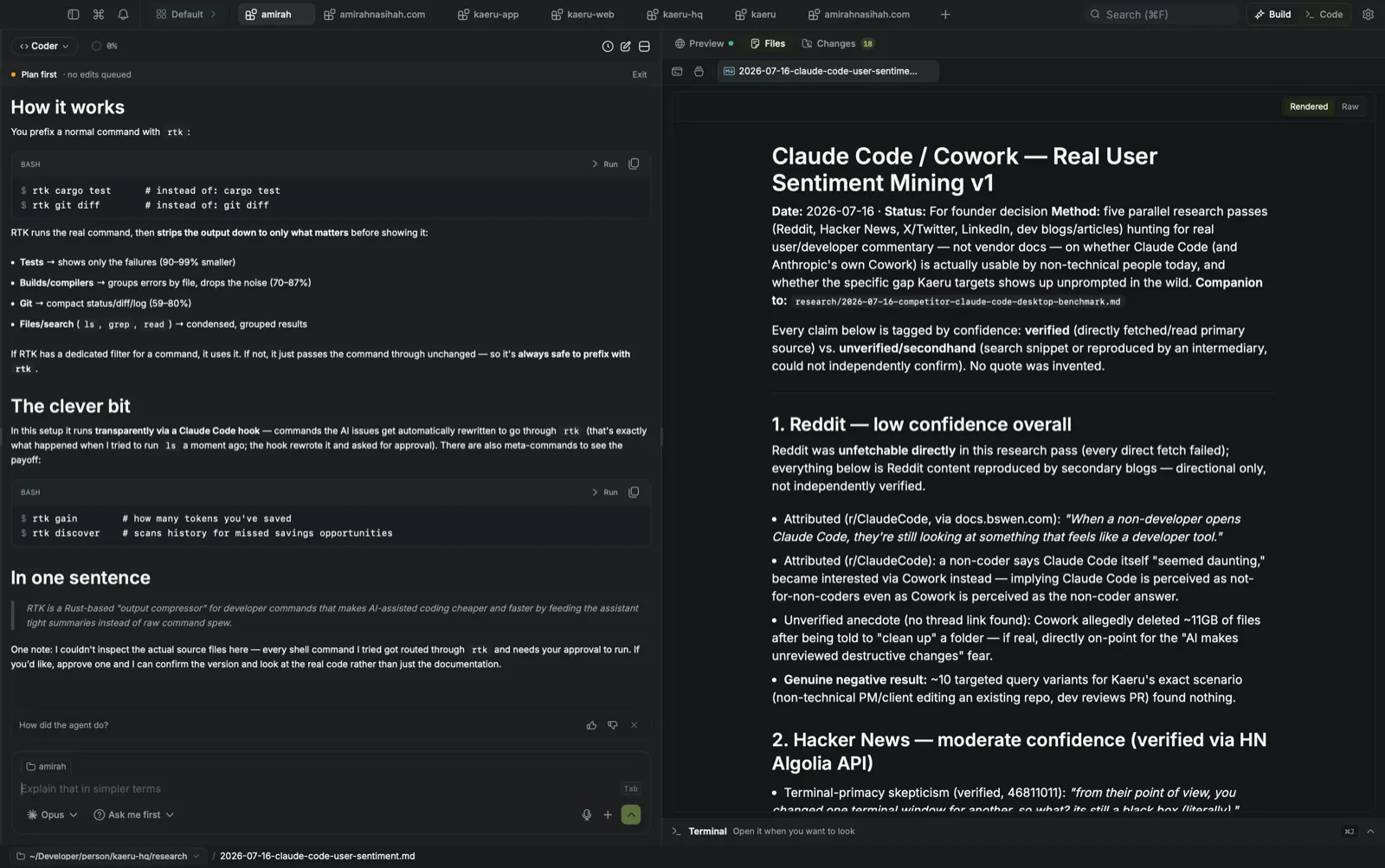
Chat and agents are powered by Claude — sign in once with your Claude account, no API keys to paste. The agent plans, spawns sub-agents, remembers the project through a KAERU.md file, and can read, write, edit, grep and run commands (with an approval gate on anything it runs). Small suggestions and summaries run free on Kaeru's built-in service, no account needed.
💻 A real terminal
xterm.js with a WebGL renderer over a native PTY backend (portable-pty) — zsh, bash, fish, pwsh, cmd. Multi-tab with background streaming, split panels, inline search, true-color. On Windows, each tab can run in its own WSL distro.
✍️ A code editor that shows its work
CodeMirror 6 across all the usual languages, inline AI autocomplete, vim mode, and ten built-in themes. AI edits arrive as diffs you accept or reject hunk by hunk — nothing rewrites your files behind your back.
🌿 Source control in plain language
Stage and commit hunks, push with upstream awareness, and read your history as a real commit graph with proper lane rendering for merges and branches — described in plain language instead of git jargon.
🌐 Live web preview
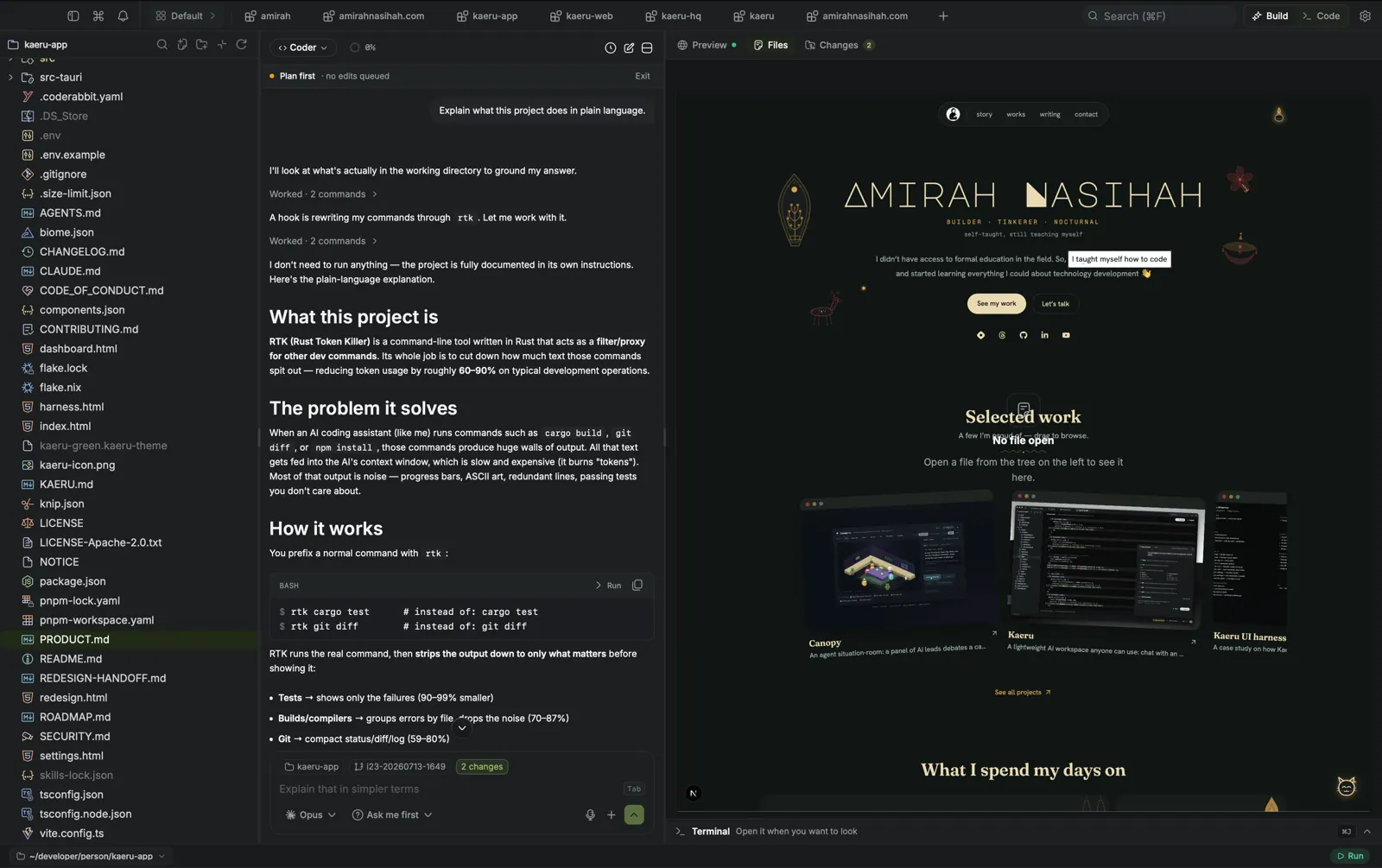
Auto-detects your local dev servers and opens them in a preview tab, with external-URL preview through a native child webview.
🎨 Make it yours
Build custom themes in-app, switch between presets and your own, import from the community, and set a background image with adjustable opacity and blur. The editor theme is independent from the app theme.
🌏 Bilingual, private by default
English and 日本語 built in, no account required. Optional, anonymous usage stats you control — never your code, files, or prompts.
How it's built
- Tauri 2 + Rust shell — native and fast, ~8 MB on disk instead of hundreds.
- React 19 + TypeScript + Tailwind v4 front end, state via Zustand.
- Terminal — xterm.js + WebGL over a native PTY (
portable-pty). - Editor — CodeMirror 6 with a custom AI-diff layer.
- AI — the Vercel AI SDK wired to Claude, with an agent loop (plans, sub-agents, tools,
KAERU.mdproject memory) and approval-gated command execution. - Cross-platform — macOS, Linux, and Windows (with per-tab WSL environments).
Who it's for
Most dev tools assume you already are a developer. Kaeru assumes you're not — a non-technical maker, a vibecoder, someone more at home in Japanese — and still gives you the real thing underneath: a genuine terminal, real git, a proper editor. It stays small, keeps your work private, and never asks you to paste an API key to get started.
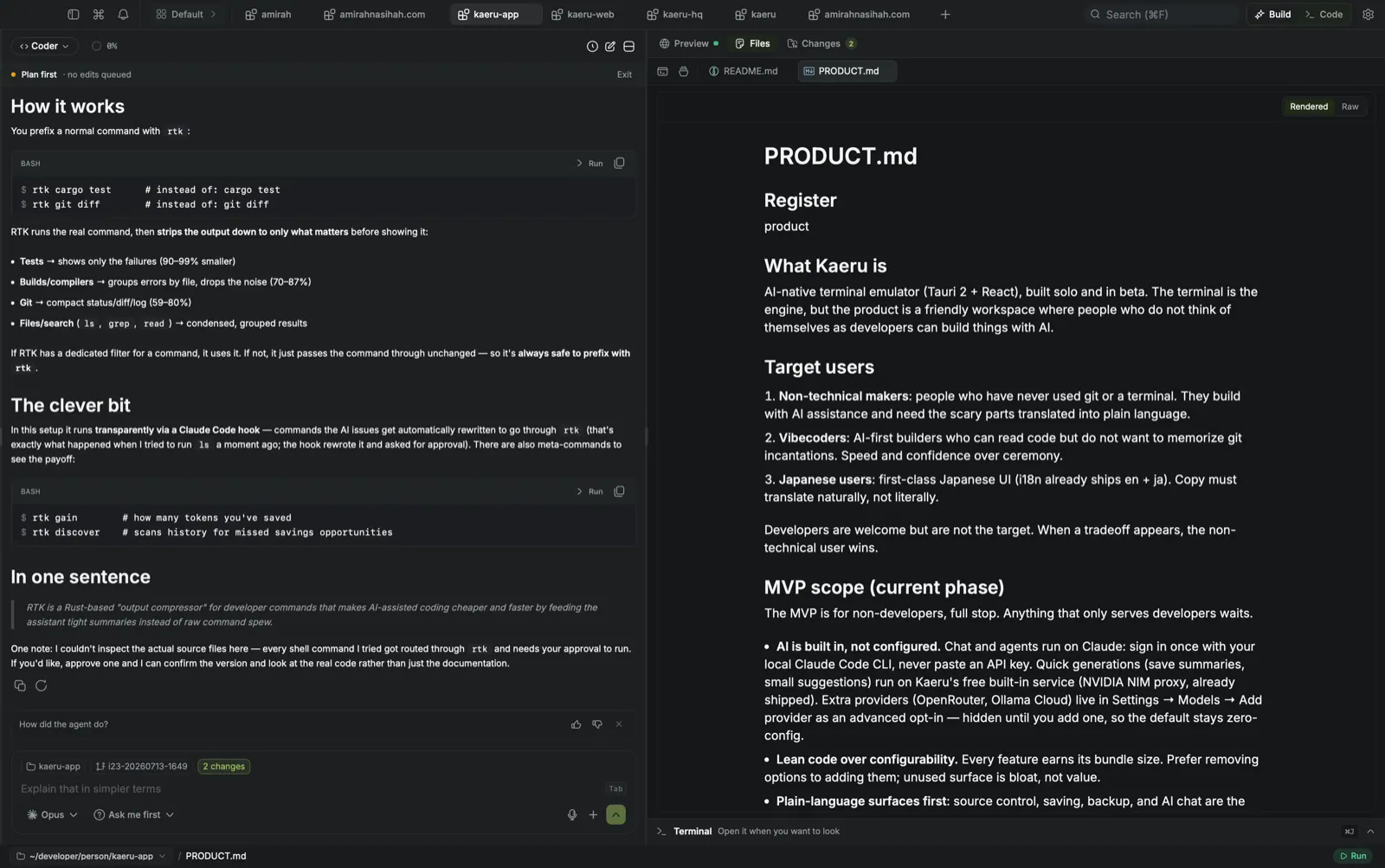
Beta — a solo side project, indie and under active development, so expect rough edges.
More projects
view all →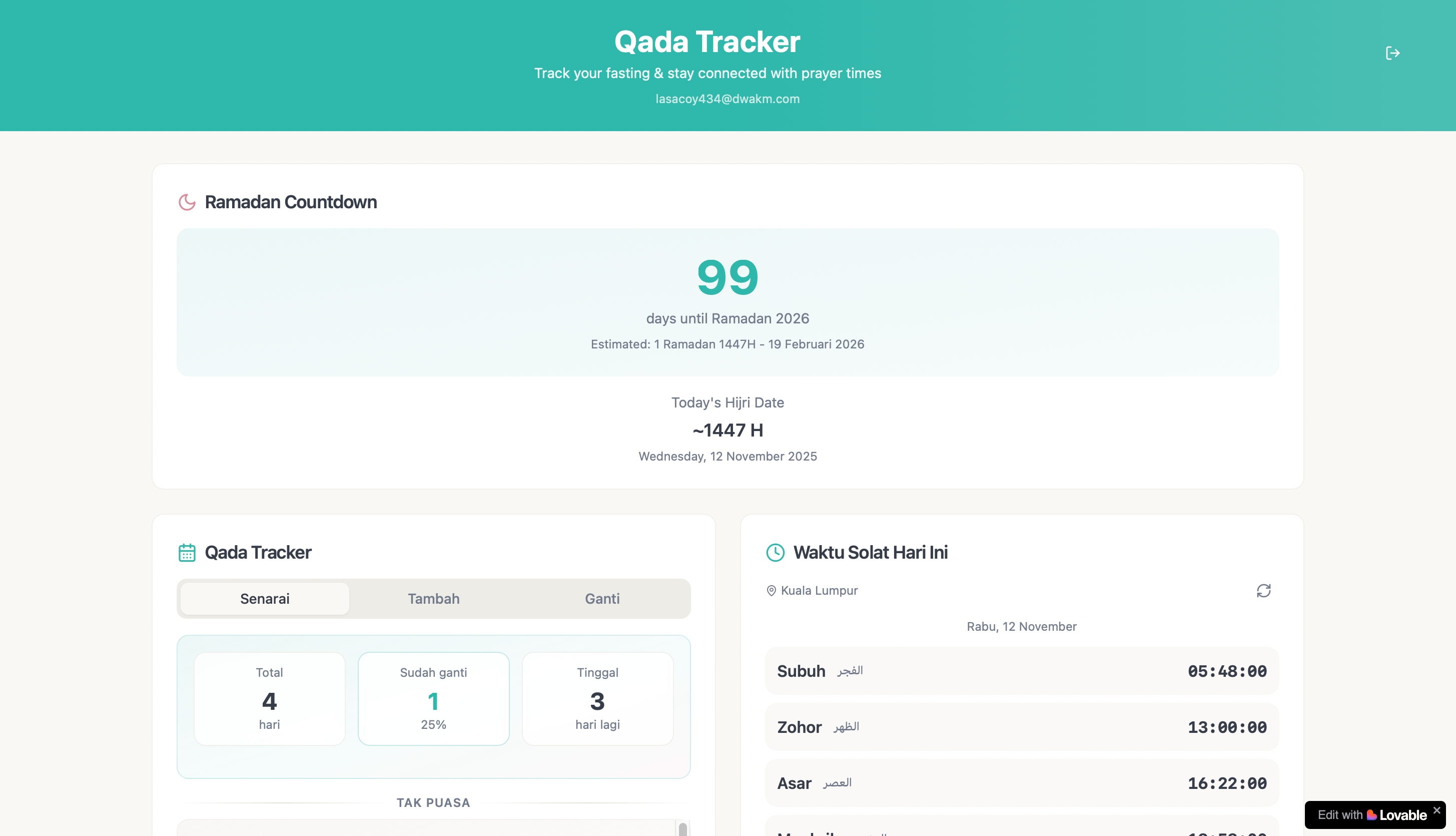
Ramadhan Qada Tracker
Qada Tracker to track your fasting & stay connected with prayer times. Use Supabase and Supabase auth for user login to store persistent data.
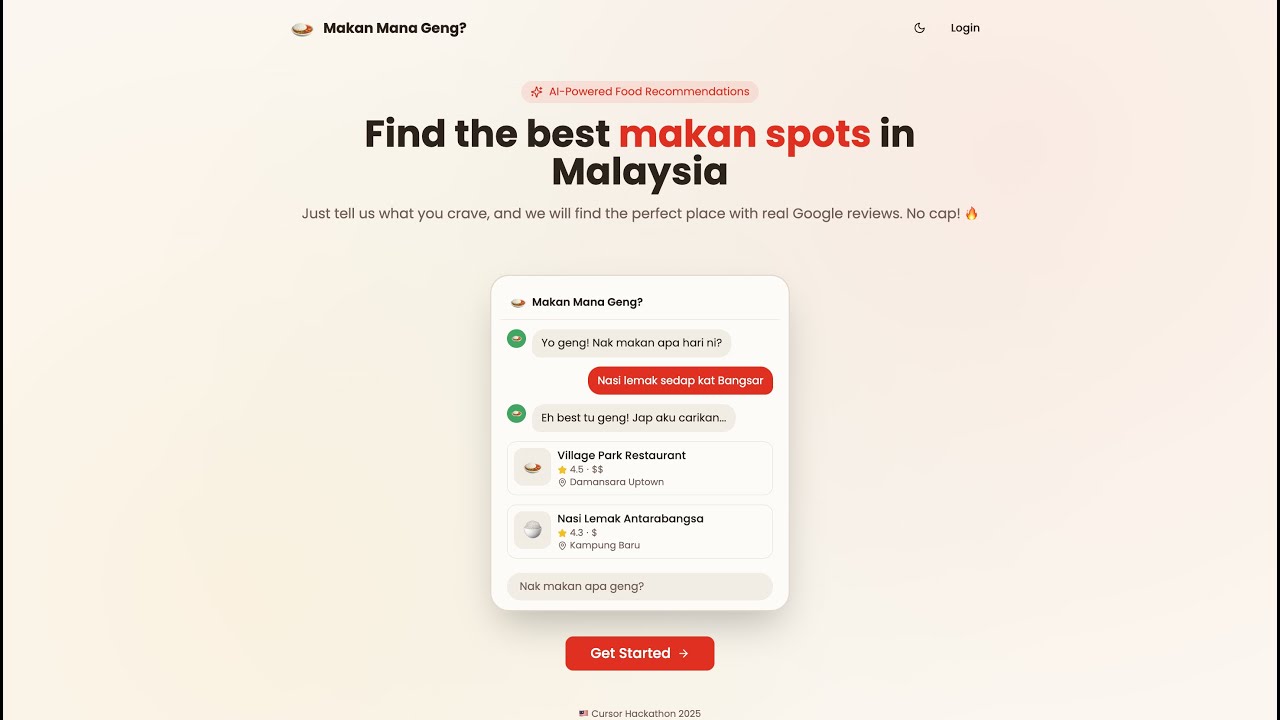
MakanMana
Your AI-powered food plug for the best makan spots in Malaysia. Ask naturally in Manglish and it hooks you up with real places, backed by real Google Maps reviews. Built with Syahirah for Cursor Hackathon 2025.
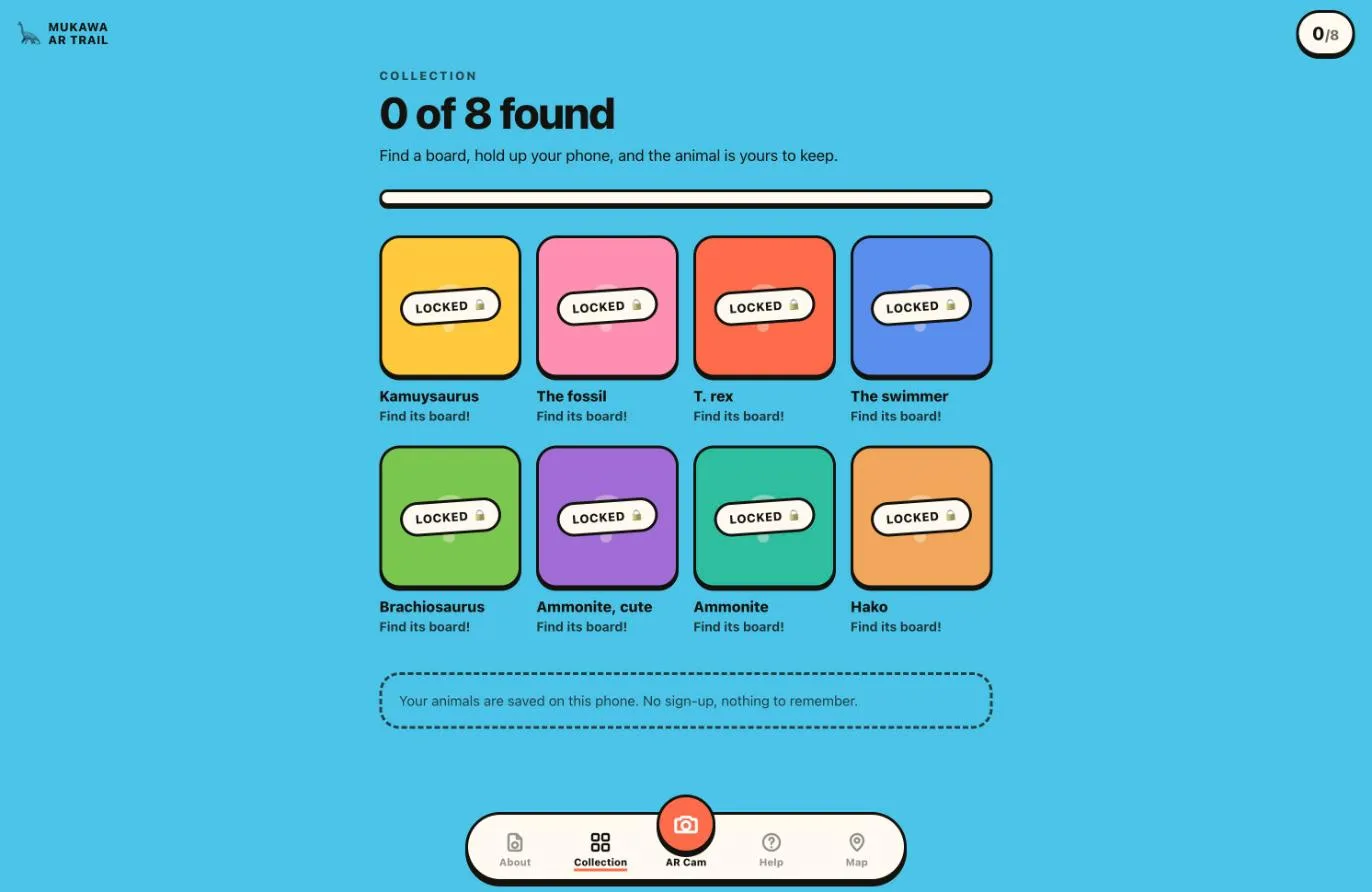
Mukawa AR Trail
A web AR trail built as a study for the Mukawa dinosaur story. Eight printed boards hang around a building, each with a picture and a QR. The QR only opens a link, so the phone's own camera does the scanning; the app asks for the camera when the visitor taps, recognises the picture itself as an image target, and stands the creature on the board as you move. Every board found unlocks its creature in a collection saved on the phone, with no sign-up. Built end to end by me: the trail app, the image targets, the printed panels and the deploy.